News + Resources
Industry news, Astaara press releases & maritime cyber risk resources
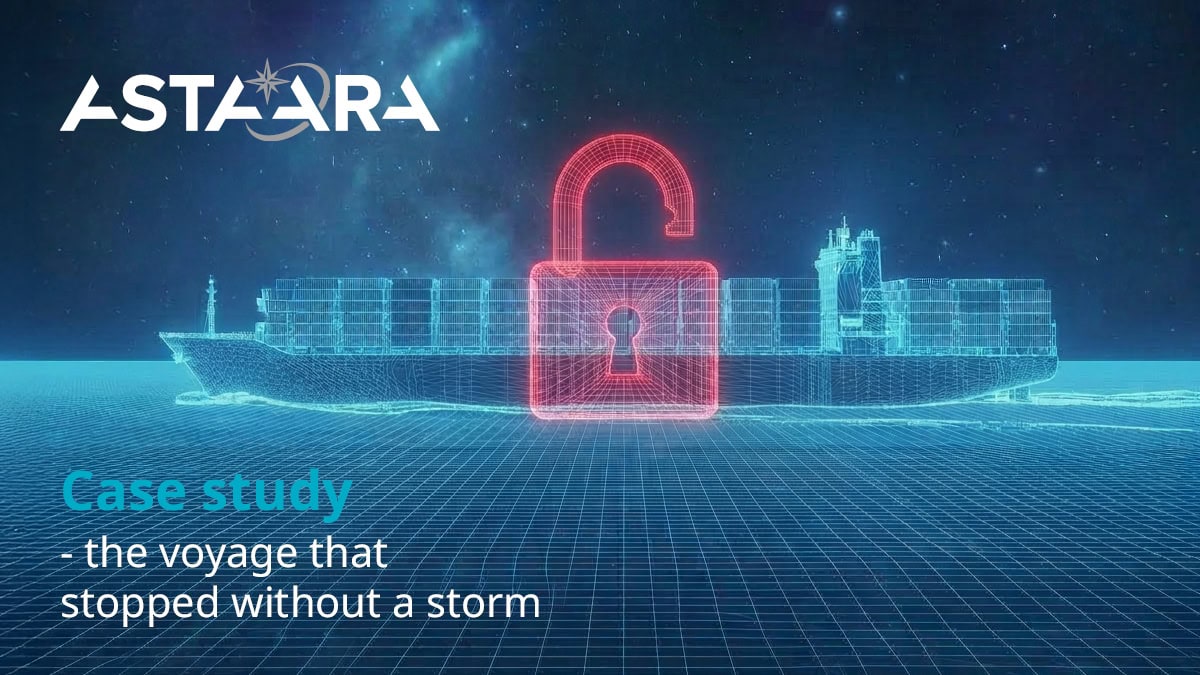
Two years ago, an incident aboard a commercial tanker fleet exposed a growing and often underestimated risk in modern shipping: cyber vulnerability at sea. What began as a technical failure quickly escalated into a full operational crisis, ultimately testing the limits of both crew endurance and the concept of seaworthiness itself.
The event caused IT (windows) assets constantly to reboot, including computers hosting Bridge Management Systems. This resulted in e.g. an inability to access e-mail and other IT systems. Every windows-based asset on the vessels was affected, and while there was a workaround, it took three days for most assets to be recovered. With these digital tools unavailable, crews were forced into demanding and unsustainable workarounds.
Growing operational stress
Each watch had to divide its personnel, allocating individuals to monitor functions that would typically be automated. At the same time, they were still required to maintain a proper lookout and ensure the vessel’s safe passage. The result was a rapid erosion of operational resilience.
Fatigue set in quickly. The crew became physically and mentally drained from prolonged high-intensity workload and lack of rest. Meanwhile, fleet management ashore began to recognise a critical inflection point: the situation was approaching a level where it might no longer be safe to continue the voyage.
Planning under pressure
Contingency planning began in earnest. Discussions included the possibility of dispatching external support, arranging towage, or deploying a standby vessel. These are not decisions taken lightly in commercial shipping, as they carry significant operational, financial, and legal implications.
Fortunately, the incident was resolved on the fourth day. There was no physical damage to the vessel; the failure was entirely internal. However, by the time normal operations were restored, the crew had reached the very limits of their capacity to cope.
Legal and financial consequences
This scenario, based on a real incident, highlights a critical evolution in maritime risk: seaworthiness is no longer solely about hull integrity or mechanical reliability. Increasingly, it encompasses cyber seaworthiness, the ability of a vessel’s digital and networked systems to function reliably and securely. In this case, while catastrophe was avoided, the margin was uncomfortably thin. Had the outage persisted any longer, the operator was seriously considering abandoning voyages.
Such a decision would have triggered complex consequences. Towage operations would likely have been required, incurring substantial costs. Under the principle of General Average, those costs would be shared proportionally between the shipowner and cargo interests, based on the respective value of the vessel and its cargo. However, the owners of the cargo could have challenged their liability, arguing that the vessel was rendered cyber unseaworthy due to a failure to ensure the reliability of its critical systems.
Lessons for a digital maritime future
In essence, what unfolded was more than a technical failure. It was a demonstration of how digital dependency can directly impact safety, human performance, and legal exposure at sea.
As the maritime industry continues its digital transformation, this case serves as a stark reminder: resilience is no longer just built into steel and machinery, but into code, networks, and the people who must operate without them when they fail.



Astaara Underwriting UK Limited is an appointed representative of Davies MGA Services Limited, a company authorised and regulated by the Financial Conduct Authority under firm reference number 597301 to carry on insurance distribution activities. Astaara Underwriting UK Limited is registered in England and Wales company number 12570450. Registered office at 5th Floor 20 Gracechurch Street, London, United Kingdom, EC3V 0BG.
